


Paying for college is not for the faint of heart, as you likely already know. You may have some questions about all your options, even if your parents are able to pull out their checkbook and write a check for your next four years.
In the 2022-23 academic year, according to the National Center for Education Statistics, the average total cost of attendance for first-time, full-time undergraduate students living on campus at four-year degree-granting institutions was highest at private nonprofit institutions ($58,600), compared to private for-profit institutions ($33,600) and public institutions ($27,100).
Here is our comprehensive guide for strategies, resources and tips for paying for college. We will cover understanding college costs, saving for college, understanding financial aid, and methods of paying for college. Luckily, you can learn how to pay for college.
Understanding College Costs
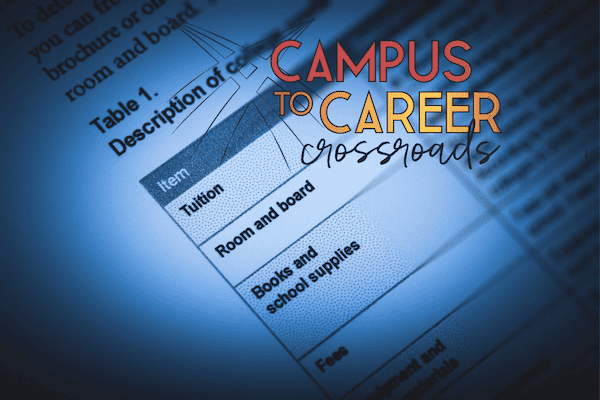
College costs are typically broken down into several cost categories: tuition and fees, room and board, books and supplies, transportation, and personal expenses.
- Tuition: Tuition and fees include the cost of classes and professor instruction. You will pay less for public in-state tuition compared to public out-of-state tuition. The sticker price will look higher for private colleges, but recognize that whether you are out of state or in state, private colleges and universities may cost less or equal to an in-state institution.
- Fees: Fees are mandatory charges that cover various services and facilities, like technology fees.
- Room and board: Room and board refers to the room you live in on campus and the meal plan, from basic to comprehensive plans.
- Books and supplies: Textbooks and supplies depend on the classes you plan to take. For example, one class may only require a workbook, while another may require three different textbooks. You may need to purchase additional supplies, like notebooks, a computer, or lab materials.
- Transportation: How will you get to and from school? Will you bring your own vehicle or pay for airline tickets or train tickets to get home during breaks on campus?
- Personal expenses: You will need to purchase personal care items, entertainment, clothing, and have other expenses throughout the year.
- Health insurance: If not covered under a parent’s plan, you may need to purchase health insurance.
These major elements make up the various college costs.
Keep in mind that the total cost of attendance can vary widely based on the type of institution and your lifestyle.
Paying for College: Options You Can Use
So, how can you pay for college? There are several techniques you can use, and it is important to remember that there is not just one way to tackle it. There is more than meets the eye, here, too. For example, you seriously could spend hours and hours looking for scholarships for college. It could almost become a part-time or full-time job!
Here are some ways to get the job done: college savings, financial aid, tuition payment plans, and alternative funding options. Let’s go over each option.
College Savings
How much do you have to pay for college? You can use a wide variety of college savings options. Let’s walk through a few options.
- 529 plans: 529 plans are tax-advantaged savings accounts designed to encourage saving for future education costs, allowing the money to grow tax-free if used for qualified education expenses. Contributions to a 529 plan are not federally tax-deductible, but many states offer tax deductions or credits for contributions. Funds from a 529 plan can be used for tuition, room and board, books, and other qualified expenses at most colleges and universities.

- Coverdell Education Savings Accounts: A Coverdell Education Savings Account (ESA) is a tax-advantaged savings account that allows families to save up to $2,000 per year for educational expenses. Earnings in a Coverdell ESA grow tax-free, and withdrawals are also tax-free when used for qualified expenses such as tuition, books, and supplies. Contributions to a Coverdell ESA are not tax-deductible, and there are income limits for contributors to be eligible.
- UGMA (Uniform Gifts to Minors Act) and UTMA (Uniform Transfers to Minors Act) accounts: These are custodial accounts that allow adults to transfer assets to minors, which can be used for education or other expenses. These accounts provide a way to gift money or investments to a child, with the assets managed by a custodian until the minor reaches the age of majority. Earnings in UGMA/UTMA accounts are subject to taxes, but the first $1,250 of unearned income is tax-free, and the next $1,250 is taxed at the child’s rate.
- Other account types: You can tap into other types of accounts, like traditional savings accounts, CDs, stocks, even Roth IRAs. It is a great idea to consult with a financial planner to ensure you’re investing in the right type of accounts for you.
Financial Aid
You are likely extremely interested in finding out what types of financial aid are available to you. If you want to qualify for federal aid, you must file the Free Application for Federal Student Aid (FAFSA). The FAFSA is a short application that sums up your financial situation. For example, you’ll list your income and other financial information. The FAFSA will assign you a Student Aid Index (SAI), which helps the government and your college determine how much financial aid you can get. They might offer grants, scholarships, loans, and work-study:
- Grants: College grants, a type of gift aid, are need-based financial awards you do not have to repay, designed to help students cover educational expenses. You can get grants from federal or state governments, colleges, and private organizations. You can get a grant based on financial need, academic achievement, or other criteria. Grants can reduce the out-of-pocket cost of attending college.
- Scholarships: Scholarships, including full-ride scholarships, are another type of gift aid for students based on various criteria such as academic achievement, athletic ability, artistic talent, or other merits. You do not have to repay scholarships, and you can get them from colleges, private organizations, non-profits, and corporations. Like grants, they’re the ones you wholeheartedly want in your aid package. Learn how to apply for multiple scholarships at once.

- Loans: You will pay loans back, and they come in two different forms: private loans and federal student loans. Federal student loans come directly from the federal government through the Department of Education. You must file the FAFSA to qualify for them. Private student loans do not come from the government — you can get them from a local bank, credit union, or other private student loan lender. Private loans often require a cosigner — usually a parent or another relative, and that person will need a good credit score and show proof of income. Note that you can even learn how to pay for college without loans!
- Work-study: Work-study is the money you receive to work on campus. You must file the FAFSA to receive work-study. You may receive, say, $2,000 to work on campus, but you actually must work on campus to receive the money. You will also want to check how you receive the money. You may get a check for it instead of it chucking directly into your bank account or toward your tuition.
You may also need to fill out the CSS Profile, which is an online application private and some public institutions require. It differs from the FAFSA.
The CSS Profile is an online application used by colleges and universities in the United States to determine eligibility for non-federal financial aid and institutional grants. It collects detailed information about a student’s family finances, assets, and expenses to provide a more comprehensive view of their financial need compared to the FAFSA. The CSS Profile is typically required by private institutions and some public universities for undergraduate and graduate students seeking financial aid beyond what the FAFSA offers.
Tuition Payment Plans
You might have heard about a tuition payment plan, but what is a tuition payment plan, exactly?
It is a structured arrangement that allows families to pay tuition and fees in installments over the course of time, throughout the course of the academic year. It breaks down the tuition into regular intervals (such as eight months) to make costs of tuition, room, board, and fees more manageable. Note that you may pay a fee every month to enroll in this option.
It is a great option for families who are budget enthusiasts or families who break their money into a month-by-month basis.

How do you enroll in payment plans? You can talk to the bursar’s office or financial aid office to enroll. You can also get all the details through this office about how much you will pay to enroll and more.
Alternative Funding Options
While this section might sound like they are just offhand options, take them seriously. They are the real deal and can seriously help you pay for college.
- Employer tuition assistance: Many employers offer a tuition assistance program, meaning that they will pay you to attend college. This is a great way to take care of college expenses. Jobs that pay for college include as a barista at Starbucks or a stocker at Target — these jobs can pay for tuition assistance. Learn more about how to make money in college.
- Military benefits: If you are interested in the military, the GI bill, or other military benefits can help you pay for college.
- Crowdfunding and peer-to-peer lending: Crowdfunding and peer-to-peer lending involves asking for money online. This is definitely an alternative funding option, but it is worth a shot, particularly if you have a challenge, such as a health challenge, and would also like to attend college.
Reducing College Costs
You might also consider reducing college costs from the get-go. This means that you make different decisions based on the lowest costs. Here are a few options:
- Community college: Consider starting out at a community college to save money. This is a great idea because you can still attend your dream school — after a year or two at a community college. Some states offer free community college, so that can be a huge money savings.
- In-state vs. out-of-state tuition: Residency can affect the cost of college, big-time. Staying in state can mean the difference between paying tens of thousands of dollars for a college education. Staying in state might even save you a hundred thousand dollars!)
- Accelerated programs: You can also opt into an accelerated program to get your degree faster. For example, let’s say you want to get a physician’s assistant degree fast. You might get it in five years through a 3+2 combined pre-professional and professional phase (five-year complete program).
Managing Student Debt
Let’s talk about student debt for a minute. You will likely want to try to manage it, and you can do that by creating a budget and sticking to it. You can often manage student debt by simply putting a budget into place.
Loan forgiveness programs means that you can get rid of loans completely and not have to pay them back, and you can look into all the different types of forgiveness programs (as long as you meet the requirements). Public service loan forgiveness is one of the most common ways to achieve loan forgiveness, and being a teacher, government employee, nonprofit, nurse, doctor or other medical professional can give you the option for loan forgiveness programs. If you have a disability or repay your loans under an income-driven repayment (IDR) plan, you can qualify for a loan forgiveness program.
You can also consider refinancing and consolidating your student loan. Now, it is important to understand the difference between refinancing and consolidating, because they are two different things.
- Refinancing: Refinancing means replacing one or more of your loans (either federal or private loans) with a private loan. Ensure that it makes sense to refinance, particularly if your interest rate is lower for a federal loan compared to a private loan refinance.
- Consolidating: Consolidating means putting two or more of your federal loans in one bucket and changing your interest rate. It can make sense to do this if you will lower your interest rate compared to keeping them all separate. However, it might not make sense if you will increase one or more of your interest rates.
Choosing an Affordable College
Choosing a school that makes sense for your budget is a good way to go. Research the school’s net price using their net price calculator, which reveals the costs of that particular college.
For example, a $30,000-per-year school with no aid might cost you more than a $60,000-per-year school offering $40,000 in aid. In this case, the higher-priced school could actually be more affordable due to the lower net price.
Tap into Expert Advice and Resources
Campus to Career Crossroads offers college and professional guidance, and in the present-day world, it is vital to get advice about how to approach the college search process. You should utilize Campus to Career Crossroads to get useful tools for planning and managing the college search process.
Consider tapping into other experts, such as your school counselor, online tools and calculators to help you calculate costs, and books and websites that can help you learn how to pay for college.
Paying for College Does not Have to Be Complicated

Paying for college is possible, and you can employ many different types of tips and tricks to how to pay for college tuition. You may take a puzzle-piece approach to help you pay for college, but above all else, you can find ways to pay for college.
We want to be as encouraging as possible in your journey, but note that planning and exploring involves starting early and seeking expert advice. Campus to Career Crossroads can step in to help you, and we can address any common concerns about financial planning for college you may have.
FAQs
Look at some commonly asked questions about college.
How do middle class families pay for college?
Middle-class families pay for college using a combination of strategies, including savings, financial aid, and loans. Middle-class families often utilize savings accounts like 529 plans, and apply for federal and state financial aid, take out federal or private student loans to cover remaining expenses, and even home equity loans or personal loans to help finance college. Student work-study programs and part-time jobs can also contribute to managing college costs.
What is the right way to pay for college?
There is no “one right way” to pay for college, but it is important to understand the impact of student loans on your future. For example, if you borrow $30,000 per year for college, you might end up paying back over $120,000, plus interest, over your loan term. Ultimately, it is important to remember that you have to pay the money back, and it is possibly worth considering attending a community college or less expensive university to save incredible amounts of money.
Can I pay for college without my parents?
Yes, you can pay for college without your parents. You can apply for financial aid, get a job, do a work-study job, and employ other types of methods to pay for college. You can also borrow student loans, but it is also important to remember that you will have to pay them back. Note that many times to make college costs happen, your parents may need to consider a Parent PLUS loan, which technically means it is in their name, and they would be responsible for the repayment of the loan.
Is there a way to get paid to go to college?
Yes, you can get paid to go to college, typically through scholarships and grants. Now, you can also get a job and work your way through college as well instead of spending all your time looking for scholarships and grants. Devise the best way to pay for college, knowing that the scholarships you have applied for may not be a guarantee.


0 Comments