


What is a reach school, exactly? Even if you know intuitively what it means, you likely still have questions, such as, “How much of a ‘reach’ is this particular reach school?” and “How many reach schools should I apply to?”
Let’s walk through the definition, how to identify reach schools, why you should (or should not!) put reach schools on your list, and strategies for boosting your reach school applications. By the time you are done reading, you will know everything you need to know about reach schools and the pros and cons of going that route.
What is a Reach School?
A reach school is a college or university that has higher academic requirements than what your academic credentials can meet. For example, if a particular college or university typically admits students that earn between a 31 and 36 on their ACT and you have scored a 27, that particular institution would be considered a reach school for you.
Any school where you have less than a 30% chance of getting accepted would be a reach school. It is important to note that the Ivy League acceptance rates often fall below 10%, so Ivy League universities are reach schools for every single person who applies. Other highly selective colleges might have overall acceptance rates below 20%, and those could also be considered reach schools.
How to Identify Your Reach Schools
What is considered a reach school? How do you know whether or not you have put a reach school on your list?
At Campus to Career Crossroads, we help students identify how schools fit into a particular category on your list, including the “reach” school category. This article will give you an idea of how you can categorize reach schools in this article, but for the best selection methods, contact us and we will walk you through the high school to college transition process in person!
Compare Your Academic Profile to Admitted Student Data
Every college and university publishes admitted student data that walks through the academic profile of that particular class. For example, here’s Massachusetts Institute of Technology (MIT)’s middle 50% score range of admitted students (25th and 75th percentiles):
| Test | Range |
| SAT Math | [780, 800] |
| SAT ERW | [740, 780] |
| ACT Math | [35, 36] |
| ACT Reading | [34, 36] |
| ACT English | [35, 36] |
| ACT Science | [34, 36] |
| ACT Composite | [35, 36] |
If you have received a 20 composite on the ACT, you are obviously better off building a list that does not include MIT. Sounds harsh, but it is important to know when to keep your toe out of certain waters.
Consider Acceptance Rates
Always consider a particular institution’s acceptance rate. For example, MIT is an extremely competitive institution because it only admits 4.5% of its applicant pool — of first-year students who apply, only 4.5% receive an acceptance letter.
To save you some time, here are some schools you could generally consider reach schools due to their highly competitive acceptance rates:
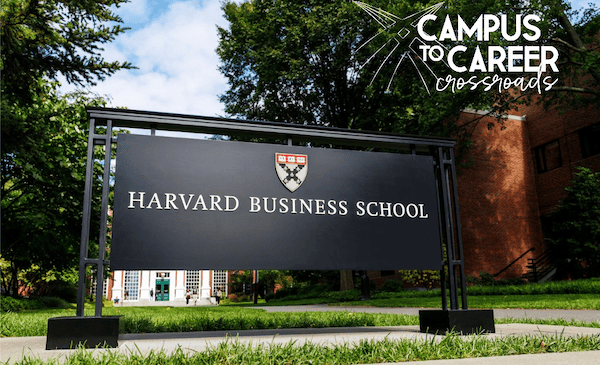
- Harvard University
- Stanford University
- Princeton University
- Yale University
- Massachusetts Institute of Technology (MIT)
- Columbia University
- California Institute of Technology (Caltech)
- University of Chicago
- University of Pennsylvania
- Brown University
- Dartmouth College
- Duke University
- Northwestern University
- Johns Hopkins University
- University of California, Berkeley (for out-of-state applicants)
- University of California, Los Angeles (UCLA)
- Vanderbilt University
- Rice University
- New York University (NYU), especially Tisch and Stern
- University of Southern California (USC)
- Georgetown University
- Amherst College
- Williams College
- Pomona College
- Swarthmore College
- Washington University in St. Louis
- Carnegie Mellon University (especially for CS and engineering)
- Boston University (for some programs like Kilachand Honors College)
- Northeastern University (increasingly competitive)
- United States Military Academy (West Point)
- United States Naval Academy
Consider Major-Specific Competitiveness
What about the majors themselves?
Let’s take a look at a university in my backyard: Carnegie Mellon University in Pittsburgh. Carnegie Mellon’s computer science and engineering programs consistently rank in the top five among institutions across the country. You might note that CMU’s overall undergraduate acceptance rate is between 11% to 14%, while the school of computer science has a lower admission rate — around 5% to 7%.
So, you can see that if you are considering a communication major, your admission likelihood is a bit higher than if you want to become an electrical engineer. You will want to consider looking at the competitiveness of the major as you’re making decisions about which college to apply for.
Why You Should Include Reach Schools on Your List
So, why should you plunk reach schools on your college search list? Here are a wide variety of reasons you may want to consider putting them on your list during the admissions cycle:
- Ambition: If you are a naturally ambitious person, it may feel natural to put reach schools on your list, especially if you have a desire to attend a top-tier school. You will likely also have the gumption to refine your essays, improve your academic profile, and showcase your unique qualities due to your level of ambition. In other words, you would not consider any different option.
- Top-tier programs: If you have always wanted to attend a highly ranked school that offers better research opportunities, faculty connections, alumni connections, and career prospects or graduate or professional school after you graduate, you may want to put reach schools on your list.

- Growth opportunities: Highly competitive schools often offer experiences far and away the best in the business. For example, they may offer study abroad experiences that will blow your mind or offer the best research opportunities in the field.
- Financial aid: Reach schools typically offer generous financial aid packages, because they want to attract the cream of the crop. You may even receive a financial aid award that looks better than what you would receive at your flagship state institution.
- Valuable experience: Even if you do not get into a reach school, applying might be a valuable experience in and of itself. It is wise to prepare for a possible rejection, and if you are okay with that, you will be in good shape.
Are there other reasons to apply to a reach school? Absolutely! You may have a completely different reason we have not put on our list.
How Many Reach Schools Should You Apply to?
You likely do not want to apply to nine reach schools and a match school and get rejected to all nine reach schools! (Remember, you have to pay application fees.)
Here is some general advice: Consider applying to two or three reach schools in a school list that contains seven to 10 schools. For example, a student might narrowing down a college list might look like this for a student with a decently high SAT score/great extracurriculars and leadership:
- Reach school: Boston College
- Reach school: Dartmouth College
- Match school: Texas A&M
- Match school: San Diego State University
- Match school: University of Oregon
- Match school: Ohio University
- Safety school: Truman State University
- Safety school: Illinois State University
- Safety school: University of Arizona
Note: I am not advocating for this as an actual student’s list — it is just an example!
You can also take the one-third rule as a balanced approach. You may want to tag one-third of your schools as reach schools, one-third as target schools, and one-third as safety schools. At any rate, balancing your college list ensures you have options that are a good fit for your academic profile, which also ensures you will have the right school to attend, regardless of whether you’re admitted to your reach schools. Applying to a range of schools with various selectivity levels can also help you get a range of financial aid awards from each school.
Learn more: How Many Colleges Should I Apply to?
Strategies for Boosting Your Reach School Application
How can you make your reach school applications fantastic and not make college application mistakes? Let’s take a quick look.
Strengthen Your Academic and Test Profile
Naturally, you will have to showcase excellent academics and excellent SAT/ACT test results to get into a top-tier institution. Many top institutions do not have “minimum” SAT scores to get in, but you’ll likely need around a 1500 or higher to be competitive. Unfortunately, even a perfect SAT score will not guarantee you admission, because admissions offices look at the “whole applicant,” including extracurriculars, classes taken, GPA, and other major factors.

You will need to take the most challenging classes in a variety of subjects as well, so do not shy away from the AP and honors classes your high school offers. You will need to take:
- English: Four years, with extensive writing courses
- Math: Four years
- Science: Four years of biology, chemistry, and physics
- History and social studies: Three years, including American and European history
- Foreign language: Four years of one foreign language
At Campus to Career Crossroads, we can offer suggestions for classes students should take at their high schools to prepare them for a highly selective college or university.
Write Standout Essays
You have to write an excellent college essay — no ifs, ands, or buts. For example, you must crush the 650-word limit on the Common App with an incredible essay. Your essay must be thoughtful, authentic, and showcase your very unique voice and story.
You will want to hook the admissions reader with the very first sentence and keep them salivating for more information about you. If you are truly masterful in creating your essay, you leave your reader wanting more. We have a fantastic essay expert on our staff who can help you steer your essay in a way that will deliver massive impact.
Highlight Extracurricular and Personal Fit
Colleges and universities want to ensure they are admitting students that will be a missing puzzle piece in their student body. You will receive space on the Common App to outline your extracurricular activities. It is important to list them in order of most important/ highest leadership offerings to more passive involvement.
This is not the time to think, “Oh, well, I can slouch on this section, because it is not as important as the essay!” — because that’s not true. Mind your typos, do not inflate your involvement, and take care to make this section exceedingly excellent. A standout admission interview does not hurt, either!
Learn more: How to Tour Colleges Like a Pro
Leverage Your Application Strategy
There is a level of strategy involved in how you apply to colleges. For example, applying Early Decision (ED) to a certain school means you will apply Regular Decision to others. It is important to consider all the pros and cons to applying ED (which means you are committed to that institution and must take all other applications off the table). We can give you guidelines on how to leverage the right application timeline for the right schools on your list.
Common Reach School Misconceptions
The biggest misconception about reach schools is that some schools are always a reach school because of their competitive nature. The other misconception: Reach does not mean impossible, and it’s important to recognize that holistic factors matter, such as involvement, interests, goals, and more.

Let’s explore an example. Let’s say our student, Emily Smith, has a 4.0 unweighted GPA and an SAT score of 1580. She ranks first in her class, out of 1,000 students. She is president of the student council, a national science fair winner, the founder of a local nonprofit tutoring under-resourced students, a varsity soccer captain, participated in competitive college summer programs, and she’s fluent in two languages. Here is her (short) list — not her entire list:
- Harvard University (Reach)
- University of Miami (Match)
- University of Illinois Urbana-Champaign (Safety)
Emily’s academics are flawless, her test scores are just about perfect, and her extracurriculars show leadership and impact. But even Emily faces a reach school in Harvard because everyone’s top of their class, national award winners, leaders in their communities. The pool is just that competitive. Admission depends not only on excellence, but on institutional priorities, geographic diversity, and even a bit of luck.
However, is it possible for Emily? Absolutely. She could get admitted to Harvard.
Learn more: What do College Admissions Officers Really Look for?
Reach Schools Are Not Impossible, but Keep Perspective
Looking at Emily’s example above, she absolutely could get admitted to Harvard, but it is important for her not to hang all her hopes on getting in. It is important to keep perspective on your chances at the most competitive reach schools. They reject far more than they admit. Furthermore, it is also important to note that one person’s reach school might not be an Ivy League — it might be their flagship state university!

Therefore, it is important to balance strategy, personalized research, and realistic optimism. Reach out to Campus to Career Crossroads to help you strike that perfect balance.
FAQs
Still asking, “What is a good reach school for me?” Read on to learn more.
What counts as a reach school?
Reach schools are the schools of your dreams. A reach school can be any school that will be a “reach” for you to attend — in other words, it has a higher admission profile than what your own profile offers (such as GPA, test scores, etc.) It might be an Ivy League or it might be your flagship state institution. It completely depends on your admission profile. One person’s reach school is not another person’s reach school!
Is it okay to apply Early Decision (ED) to reach schools?
Yes, it’s okay to apply ED to reach schools, but only if you would be absolutely okay with attending that institution. If you were to get into this reach school when applying ED, you would be obligated to attend. However, if you are absolutely sure you want to attend this institution and have a shot at attending, applying ED may be a great option for you.
Is Harvard a reach school?
Yes — Harvard is a reach school for everyone. Even students with perfect SAT scores, 4.0 GPAs, and impressive extracurriculars may not be admitted. That is because Harvard receives tens of thousands of highly qualified applications every year but admits fewer than 4% of applicants.
Beyond academic excellence, Harvard — like many elite institutions — has to meet a wide range of institutional goals. These can include admitting students from underrepresented regions, admitting various interests and backgrounds, and fulfilling commitments to recruited athletes, yield protection, etc.
So even if a student checks all the traditional “academic” boxes, admission to Harvard is never guaranteed, which is exactly what makes it a reach.




0 Comments